
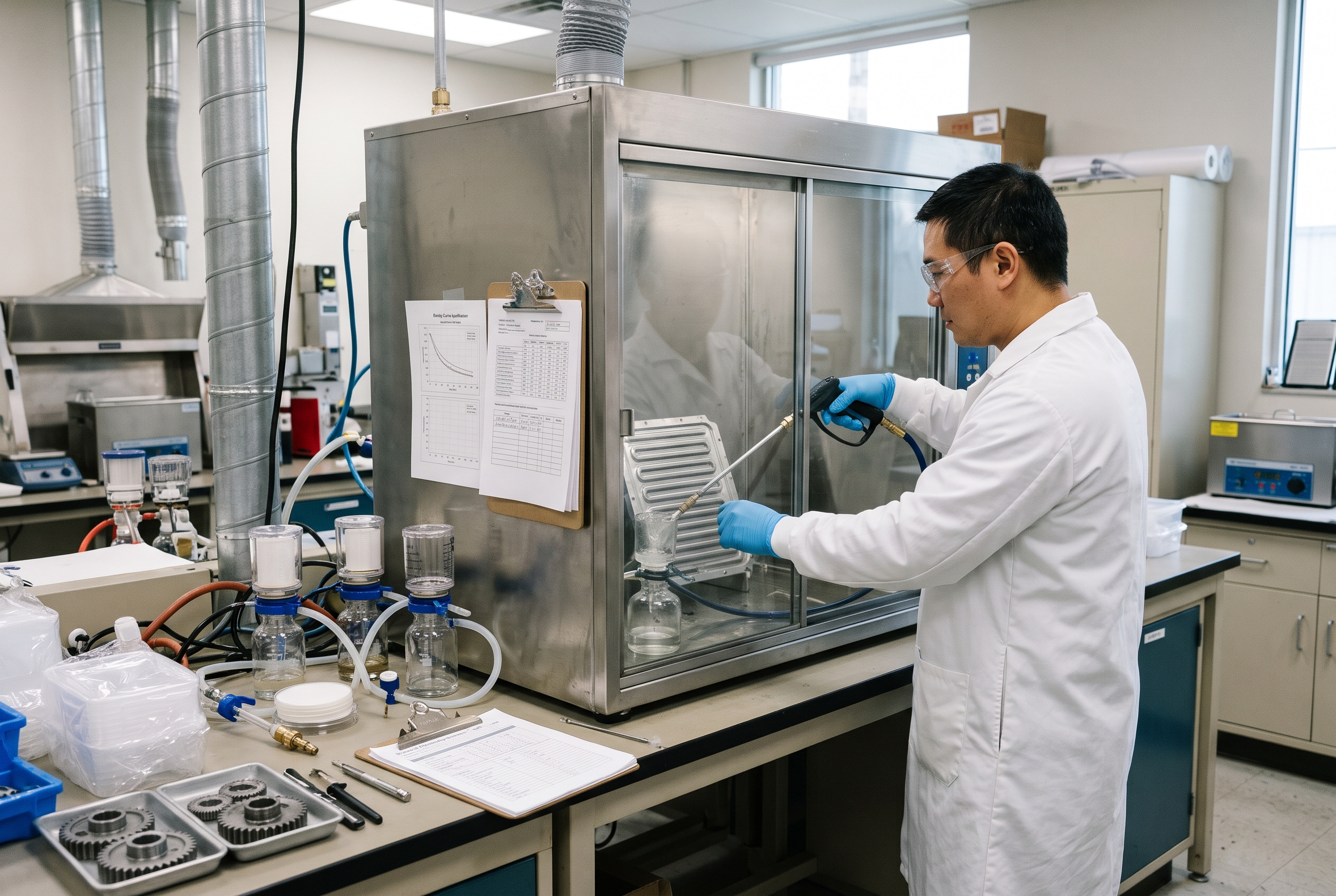
As global automotive manufacturing transitions rapidly toward battery electric drivetrains and hybrid architectures, internal component cleanliness has taken on entirely new engineering stakes. Traditional internal combustion engines primarily guarded against abrasive wear inside oil and fuel passages, whereas modern electric platforms combine intricate thermal cooling loops with sensitive high voltage electronics located inside shared enclosures. ISO 16232 testing provides the validated laboratory extraction and inspection procedures needed to certify that heat exchangers, electric drive housings, and fluid delivery conduits enter final vehicle assembly completely free from hazardous manufacturing residues.
Selecting the proper extraction protocol is just as vital as inspecting the collected debris. Because vehicle components vary dramatically in geometry, alloy hardness, and internal surface finish, applying a validated, geometry matched laboratory procedure ensures every concealed pocket of contamination is accurately captured and measured.
Standardized Extraction Methods Matched to Part Geometry
To generate repeatable and legally defensible cleanliness reports, laboratories select extraction techniques aligned directly with the physical design of each automotive component.
- Pressurized Spray and Internal Rinsing: Technicians direct a controlled stream of filtered solvent across external machined faces or circulate pressurized fluid continuously through hollow tubes, cooling channels, and manifold bores. This technique effectively mirrors real fluid flow inside a running vehicle while dislodging stubborn metallic swarf trapped behind internal bends.
- Controlled Mechanical Agitation: Hollow pipes, fluid reservoirs, and molded coolant bottles are partially filled with clean test liquid, sealed securely, and agitated mechanically through repeatable shaking or rolling motions. Agitation thoroughly scrubs complex interior cavities where direct spray nozzles cannot physically reach.
- Ultrasonic Cavitation Extraction: Compact precision parts such as machined fittings, electronic mounting pins, and sintered gears are immersed in an ultrasonic bath that uses acoustic waves to vibrate fine polishing paste and adhered oil films loose from narrow threads and blind holes.
- Qualification Through Declining Extraction Curves: Before establishing a routine inspection schedule for a brand new part number, laboratory specialists wash identical specimens across multiple consecutive cycles. Plotting the steady drop in extracted debris confirms that the chosen solvent pressure, fluid volume, and extraction duration recover nearly all removable particles reliably.
Electrified and Advanced Mobility Components Requiring Qualification
Routine cleanliness validation directly supports thermal stability, electrical safety, and supplier approval across next generation vehicle production.
- Battery Cooling Plates and Thermal Chillers: Brazed aluminum cooling plates circulate glycol mixtures directly beneath lithium ion cell modules through exceptionally narrow microchannels. Verified extraction testing confirms that residual brazing flux and aluminum shavings cannot clog cooling paths and cause dangerous battery hot spots.
- Electric Axle Housings and Reduction Gearboxes: Compact electric drive units integrate high speed helical gears alongside direct oil cooled stator windings inside a single aluminum casting. Strict particulate control prevents electrically conductive aluminum flakes from bridging motor insulation while protecting precision gear teeth from abrasive scoring.
- Electronic Power Steering and Brake Booster Assemblies: Modern drive by wire steering racks and electrohydraulic brake actuators depend on frictionless mechanical movement and clean internal electronics. Confirming zero loose metallic burrs guarantees responsive steering accuracy and dependable emergency braking.
- Production Part Approval Process Supplier Audits: Tier one and tier two suppliers launching new stamping dies, machining cells, or automated washing stations must submit accredited cleanliness qualification dossiers before automakers authorize mass serial production.
Validating extraction methods and certifying component cleanliness protects electrified vehicle platforms from sudden thermal failure, electrical shorts, and expensive recall campaigns. By partnering with an Alstesting cleanliness testing services in Malaysia provider for accredited iso 16232 testing, automotive component suppliers and regional assembly plants secure dependable, certified diagnostic verification tailored for global electric mobility standards.
Frequently Asked Questions (FAQ)
How do engineers select between internal rinsing and agitation for hollow vehicle tubes?
Internal rinsing works best for open ended pipes, heat exchangers, and rigid fluid lines where technicians can attach clean hose fittings to pump solvent straight through at high flow velocity. Mechanical agitation is preferred for closed reservoirs, intricate blow molded bottles, or branched manifolds where sealing the openings and sloshing the test fluid scrubs interior walls more uniformly.
What role does cleanliness validation play during Production Part Approval Process audits?
During Production Part Approval Process reviews, automakers require documented statistical proof that a supplier can consistently manufacture parts meeting every drawing specification at commercial production speed. Accredited cleanliness test reports combined with extraction qualification curves verify that both the machining process and factory wash equipment operate under reliable control prior to full production release.
Why must extraction fluids be chemically compatible with tested automotive plastics and seals?
Laboratory solvents must efficiently dissolve light machining oils and carry solid debris onto the analysis filter without swelling, softening, or chemically attacking the component itself. Using an incompatible aggressive solvent on rubber O rings or molded nylon manifolds can artificially dissolve surface flakes, inflating particle counts and producing misleading test results.